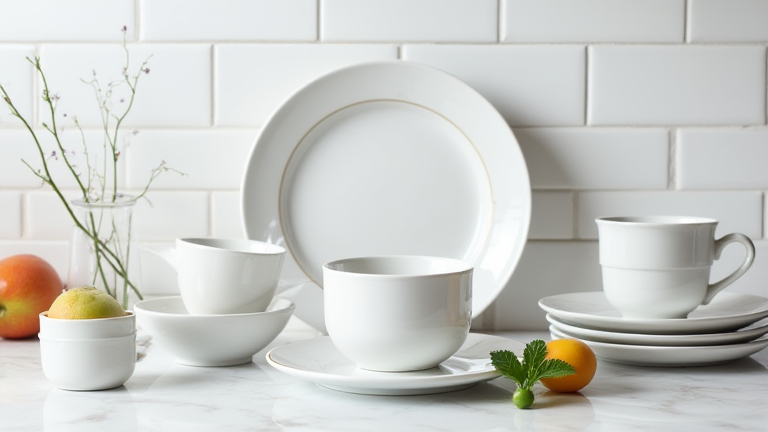
TL;DR: Porcelain dinnerware is durable but not indestructible; proper care means avoiding thermal shock, using gentle detergents, and storing with protective padding. Mastering a few simple habits—from hand-washing delicate pieces to stacking with felt liners—keeps your set chip-free and glossy for decades.
Step 1: Understand Your Porcelain’s Limits
Before cleaning, know that porcelain is vitrified (glass-like) but can still chip on hard impacts. It is microwave-safe unless it has metallic trim (gold, platinum, or luster bands)—those pieces must never go in the microwave. Also, avoid sudden temperature changes: never place a cold plate directly into a hot oven or pour boiling water into a chilled cup. Thermal shock causes invisible cracks that worsen over time.
If you want to dig deeper, check out our guide on Health Benefits of Porcelain Dinnerware: Safe & Non-Toxic.
Step 2: Hand-Washing for Best Results
For everyday plates and bowls, hand-washing is the safest method. Fill a sink with warm (not hot) water and add a few drops of mild, pH-neutral dish soap. Avoid abrasive pads, steel wool, or gritty scouring powders—these will scratch the glaze. Use a soft sponge or microfiber cloth, cleaning each piece individually. Rinse thoroughly with warm water to remove all soap residue, which can dull the finish. For stubborn food residue, soak the piece in warm soapy water for 10 minutes before scrubbing gently.
Step 3: Dishwasher-Use Rules (If You Must)
Porcelain is dishwasher-safe only if it lacks metallic decoration. If using a dishwasher, place plates upright in the rack, not overlapping, and ensure they don’t touch each other during the cycle. Use a gentle or “china” cycle with a liquid detergent (avoid citrus or bleach-based tablets, which can erode the glaze). Skip the heated dry cycle—let pieces air-dry or open the door immediately to reduce steam stress. Never wash antique or hand-painted porcelain in a dishwasher, as the high heat and water pressure will fade the artwork.
Step 4: Drying and Storage
After washing, dry each piece immediately with a soft, lint-free towel. Do not stack wet plates—moisture trapped between them can cause “water spots” or promote mildew in the glaze’s microscopic pores. When storing, place a paper towel or felt pad between each plate, bowl, or saucer to prevent scratching from contact. For cups, store them upright, not hanging, to avoid stress on the handles. Stack cups no more than five high, and never place heavy serving platters on top of delicate teacups.
Step 5: Removing Stains and Scratches
Tea, coffee, and tomato sauces can leave tannin stains. Make a paste of baking soda and water, apply it with a soft cloth, and rub in circular motions for 30 seconds, then rinse. For metal marks from cutlery (gray streaks), use a specialized porcelain cleaner or a damp cloth with a dab of non-gel toothpaste. Avoid using bleach, vinegar, or lemon juice—these acids can eat into the glaze. If you notice a fine hairline crack, stop using the piece immediately; it can shatter during washing or heating.
Step 6: Long-Term Care and Handling
Never lift a plate by its rim with one hand—use both hands, supporting the base, especially for large platters. When carrying a stack, keep your fingers under the bottom plate, not pinching the sides. Store your dinnerware in a dedicated cabinet with adjustable shelves, leaving at least an inch of space between stacks for air circulation. Check for chips every few months; a chipped piece can be repurposed as a trinket dish but should not be used for food, as bacteria can lodge in the crack.
FAQ
Q: Can I put gold-rimmed porcelain in the dishwasher?
A: No. Metallic trims (gold, platinum, silver) are not dishwasher-safe. The high heat and harsh detergents will dissolve the metallic film.
Leave a Reply