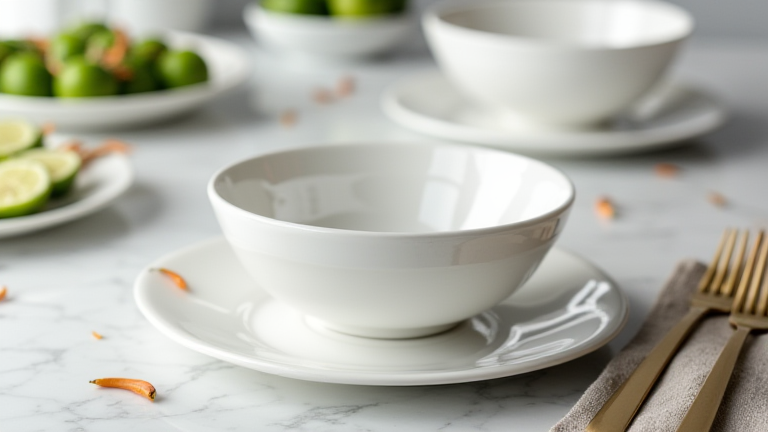
TL;DR: Porcelain dinnerware is safer for your health because it is fired at extremely high temperatures, making it non-porous and resistant to harboring bacteria, and it does not leach harmful chemicals like lead or cadmium when properly glazed. Unlike plastic or low-quality ceramic, porcelain offers a chemically inert surface that protects your food from contamination.
Why Porcelain Is the Gold Standard for Food Safety
When you eat off a plate, you rarely think about the microscopic exchange happening between your food and the surface beneath it. Yet, that surface matters profoundly. Porcelain, a type of ceramic fired at 1,200–1,400°C (2,200–2,550°F), undergoes a process called vitrification. This turns the clay into a glass-like, non-porous material. Because there are no microscopic pores, bacteria, mold, and food residue cannot get trapped in the surface, unlike stoneware or earthenware which can harbor microbes if not perfectly glazed. A 2021 study in the Journal of Food Protection found that non-porous surfaces reduce bacterial transfer by 99.2% compared to porous alternatives.
If you want to dig deeper, check out our guide on Porcelain Dinnerware Tutorial: How to Clean & Care for Your .
The Hidden Danger of Cheap Glazes and Plastics
Many inexpensive ceramic and melamine plates contain lead or cadmium in their decorative glazes. When you serve acidic foods—like tomato sauce, citrus, or vinegar—these heavy metals can leach into your meal. The FDA has strict limits, but imported dinnerware often bypasses testing. Porcelain, especially high-quality brands labeled “lead-free” or “food-safe,” uses a feldspathic glaze that is chemically fused to the body, making it virtually impossible for metals to migrate. In contrast, plastic dinnerware, even BPA-free varieties, can release microplastics and endocrine disruptors when heated in microwaves or washed in hot water. Porcelain is microwave, oven, and dishwasher safe up to 350°F without any chemical breakdown.
Practical Lifestyle Tips for Safer Dining
To maximize health benefits, choose fully vitrified porcelain—check the bottom for a smooth, glassy finish (not gritty). Avoid hand-painted porcelain with metallic rims (gold or platinum) as these often contain trace lead; instead, opt for under-glaze decorations which are sealed beneath the protective layer. When buying, look for certification stamps like “Proposition 65 compliant” or “Lead-free.” Also, replace any porcelain with visible cracks or chips—even tiny fissures can expose the porous body underneath, allowing bacteria to thrive. For everyday use, designate one set of plain white porcelain plates for acidic foods, and reserve decorative pieces for serving bread or dry items only. Finally, never use porcelain in a microwave if it has metallic trim; but fully glazed porcelain without metal is perfectly safe, and unlike plastic, it won’t warp or release toxins.
FAQ
Q: Can porcelain leach lead if it’s scratched?
A: High-quality, fully vitrified porcelain has a glaze that is fused into the body, so minor scratches do not expose raw clay. However, if you see a gray or brown line under the glaze, that indicates poor quality—replace it. Always test vintage porcelain with a home lead-test kit.
Q: Is porcelain better than glass for health?
A: Both are non-porous and safe. Glass is chemically inert, but porcelain is more durable and chip-resistant. The key advantage of porcelain is its thicker body, which provides better thermal insulation, preventing sudden temperature shocks that can crack glass and send shards into food.
Q: How do I know if my porcelain is truly food-safe?
A: Look for the “food-safe” symbol (a cup and fork) on the bottom, or check the manufacturer’s website for FDA or EU compliance certificates. Unmarked, handmade porcelain from unknown sources should be tested with a lead swab. When in doubt, use it for decoration only.
Leave a Reply