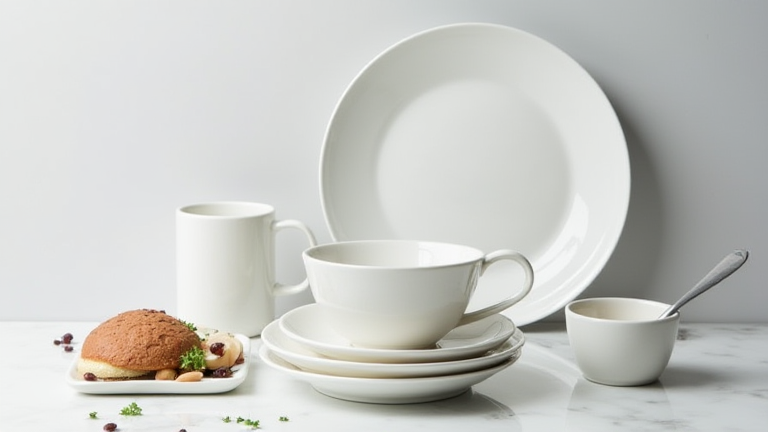
TL;DR: Porcelain dinnerware is durable yet chip-prone, so hand-wash high-value pieces and avoid thermal shock. When buying, look for high-fired, lead-free porcelain with a dense body, and prioritize rimless or reinforced edges for daily use.
1. Buying Porcelain: What to Inspect Before You Pay
First, check the base of a plate or cup. Un-glazed porcelain feels smooth, not gritty—if it feels rough, it’s likely stoneware. Tap the rim gently with a knuckle; a clear, ringing tone indicates high-fired porcelain (above 1,300°C), which is more vitrified and less porous. Next, hold the piece up to light—thin, translucent edges are a sign of fine porcelain, but for everyday dinnerware, choose a thicker body to resist breakage. Avoid any piece with visible pinholes or bubbles in the glaze, as these weaken the surface. Finally, confirm the label says “lead-free” or “food-safe” (many modern porcelains are, but vintage or imported sets may not be). For daily use, buy a set with a rolled or reinforced rim (not a sharp, thin edge) to minimize chipping.
If you want to dig deeper, check out our guide on Why Porcelain Dinnerware Is Still Tech’s Favorite Choice.
2. First-Time Use: Seasoning and Pre-Cleaning
Before using new porcelain, wash every piece by hand in warm water with a mild dish soap and a soft sponge. Do not use steel wool or abrasive pads—they will micro-scratch the glaze. Rinse thoroughly and dry with a lint-free cloth. If you notice a musty smell from storage, soak pieces in a solution of 1 part white vinegar to 3 parts water for 30 minutes, then rinse. Never put cold porcelain directly into a hot oven or microwave; let it come to room temperature first. For microwave use, check that the piece has no metallic trim (gold or platinum bands are not microwave-safe).
3. Daily Cleaning: Hand-Washing vs. Dishwasher
While many porcelain sets are dishwasher-safe, hand-washing extends their life. Use a non-citrus, non-abrasive liquid detergent. Stack plates vertically in a dish rack to avoid rim-to-rim contact. If you must use a dishwasher, select a gentle cycle with low heat, and place pieces so they don’t touch each other. Use a rinse aid to prevent water spots. Crucially, avoid washing porcelain with silverware or heavy metal pans—metal can leave gray streaks. For stubborn food residue, soak the piece in warm soapy water for 10 minutes, then wipe with a soft cloth. Never use bleach or chlorine-based cleaners; they can dull the glaze.
4. Removing Stains and Scratches
For tea or coffee stains, make a paste of baking soda and water (3:1 ratio), apply it with a soft cloth, and rub gently in circles. Rinse immediately. For hard water mineral rings, wipe with a half-lemon dipped in salt, then rinse. To remove fine gray metal scuffs (from cutlery), rub with a white magic eraser—but only on glazed, non-textured surfaces. Avoid using metal knives directly on porcelain; instead, use wooden or plastic cutlery for serving. If a chip occurs, do not use that piece for food—porcelain shards can break off. Retire chipped items or repurpose them as plant saucers.
5. Storage and Handling to Prevent Breakage
Stack plates with a soft felt pad or paper towel between each one—this prevents glaze-to-glaze friction and chipping. Cups and bowls should be stored separately, not nested if they have handles. Hang mugs by the handle only if the handle is thick and well-attached; otherwise, store them upright. Keep porcelain away from sharp temperature changes: never place a hot dish on a cold counter or pour boiling water into a cold cup. When lifting a stack, support the bottom plate with both hands—gripping the top rim causes stress fractures. For long-term storage, wrap pieces in acid-free tissue paper and use a padded container.
Leave a Reply