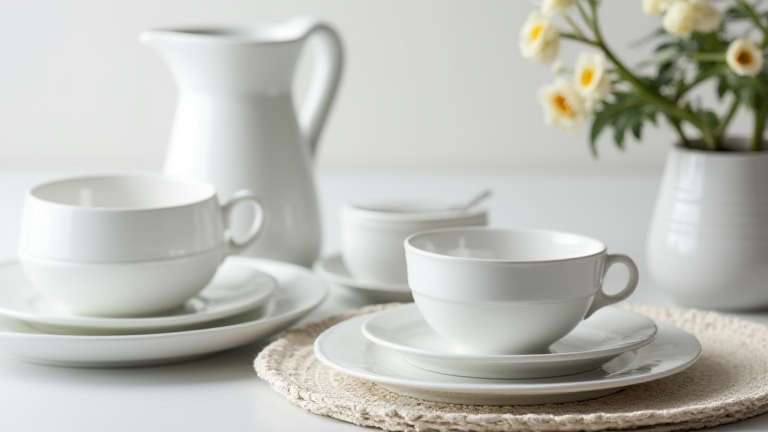
**Master Porcelain Dinnerware: The Ultimate Care & Buying Guide**
TL;DR: To master porcelain dinnerware, select high-fired, dense china for durability and buy sets from reputable brands that guarantee chip resistance. Maintain your collection by hand-washing with mild detergent, avoiding thermal shock, and stacking plates with felt pads to prevent micro-scratches and chipping over time.
Understanding Porcelain Quality
Before purchasing, you must understand what makes porcelain superior to standard ceramic. True porcelain is made from kaolin clay and fired at extremely high temperatures, resulting in a dense, non-porous body. This density gives porcelain its signature translucency and exceptional strength. When shopping, look for the phrase “fine china” or “hard-paste porcelain.” Avoid terms like “bone china” if you are looking for maximum hardness, as bone china is elegant but slightly more prone to chipping than hard-paste porcelain. Tap the bottom of the plate; a high-quality piece will produce a clear, ringing tone, whereas lower quality ceramics sound dull and flat. This simple acoustic test is the most reliable way to gauge the integrity of the material before you spend your money.
If you want to dig deeper, check out our guide on Why Porcelain Dinnerware Is Worth the Investment.
Step-by-Step Buying Instructions
First, define your needs. Determine how many place settings you require for daily use versus formal entertaining. Most households need six to eight place settings. Next, verify the manufacturer’s warranty. Reputable brands often offer a lifetime guarantee against manufacturing defects, but they will not cover user-induced damage like drops. Check the weight of the pieces. Heavier porcelain is generally thicker and more resistant to cracking, but it is also harder to stack and wash. Look for uniform glazing. Inspect the underside of the plates and bowls to ensure the glaze covers the entire surface. Unglazed areas can stain and absorb odors, making them difficult to clean. Finally, compare patterns. While white is versatile, colored patterns can hide minor stains and add personality to your dining experience.
Daily Care and Maintenance Tips
Proper care extends the life of your investment significantly. Always hand-wash your porcelain dinnerware, especially if it has gold or silver rim accents, as dishwashers can strip these metallic finishes over time. Use a soft sponge and a pH-neutral dish soap. Avoid abrasive scouring pads, as they can etch the glaze and create rough spots where bacteria can accumulate. Never place hot dishes directly into cold water, as thermal shock is the primary cause of porcelain cracking. Allow items to cool naturally before washing. When storing, place a soft cloth or felt pad between each plate. Stacking bare porcelain plates creates friction that leads to hairline cracks, which eventually turn into visible chips. If you must use a dishwasher, use a gentle cycle with a lower heat setting and place the plates vertically to prevent stacking pressure.
Repairing Minor Damage
Even with careful handling, accidents happen. If a small chip appears on the rim, do not ignore it. A small chip can grow into a large crack due to stress concentration. For minor chips, you can use a clear, food-safe epoxy resin designed for ceramics. Apply a thin layer to the chip, smooth it out, and let it cure completely before washing. For larger breaks, consider professional restoration services that use specialized adhesives to restore structural integrity. However, for severe damage, it is often more practical to replace the individual piece if the manufacturer sells replacements. Most major brands allow you to order single plates or bowls from discontinued lines, ensuring your set remains uniform without replacing the entire collection.
Long-Term Storage Strategies
When storing your porcelain for long periods, such as during a house move or if you are downsizing, proper packaging is essential. Wrap each piece in acid-free tissue paper to prevent moisture damage and scratching. Place the wrapped plates in a sturdy cardboard box with dividers. Label the boxes clearly with “Fragile” and “This Side Up.” Keep the storage area cool and dry. Humidity can affect the adhesive used in any previous repairs, and extreme temperatures can weaken the structural integrity of the ceramic. By following these storage protocols, you ensure that your porcelain dinner
Leave a Reply