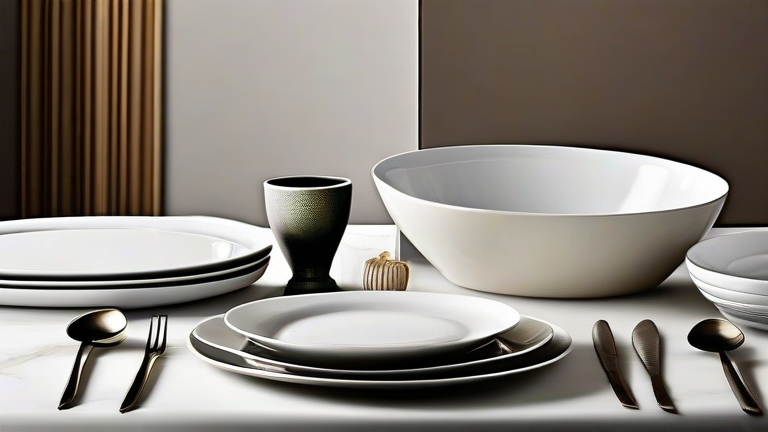
TL;DR: Porcelain dinnerware transforms everyday meals into ritualistic moments of beauty, blending centuries of craft with modern mindfulness. Its timeless allure lies in its durability, luminous elegance, and ability to anchor us to slower, more intentional living—no matter where we eat.
The Quiet Luxury of a Well-Set Table
In an age of disposable plates and hurried takeout containers, the act of setting a table with porcelain is a quiet rebellion. It whispers that you matter, that the people you feed matter, and that the meal itself—however simple—deserves a stage. Porcelain, fired at over 1,300°C, possesses a glass-like translucency that catches light like morning frost. Unlike stoneware’s rustic heft or bone china’s delicate ring, porcelain offers a balanced middle ground: substantial yet refined, cool to the touch but warm in presence. When you lift a porcelain cup, you’re not just holding liquid; you’re holding a piece of history that began in ancient China and traveled the Silk Road to adorn European palaces.
If you want to dig deeper, check out our guide on Porcelain Dinnerware Safety: Health Benefits & Care.
From Kyoto to Copenhagen: A Global Language of Craft
Travel has taught me that the most memorable meals are rarely about the food alone. In a ryokan near Kyoto, a single black-lacquered tray held a shallow porcelain bowl of miso soup, its cobalt glaze echoing the sea outside. In Copenhagen, a minimalist white porcelain plate from a local studio made a smørrebrød feel like a modernist painting. This is porcelain’s genius: it adapts to its environment while elevating it. Whether you’re hosting a Moroccan tagine dinner, a French cheese course, or a Korean banchan spread, porcelain’s neutral palette—from milky white to ash grey—acts as a canvas for color and texture. It doesn’t compete; it complements. And because it’s non-porous, it won’t absorb stains or odors, meaning your curry night won’t haunt your next breakfast croissant.
A Ritual of Mindfulness and Personal Growth
Using porcelain daily is a practice in presence. The slight clink of a spoon against a rim, the smooth glide of a fork on glaze, the weight of a bowl cradled in both hands—these micro-sensations pull you out of your phone and into the now. Psychologists call this “attention restoration,” and it’s why chefs often plate on porcelain: beauty primes your brain for savoring. For personal growth, consider this: choosing durable, heirloom-quality dinnerware is a commitment to longevity over disposability. It’s a small daily vote for sustainability and self-respect. When you hand-wash a delicate porcelain teacup, you’re practicing patience. When you host a dinner with mismatched vintage porcelain plates, you’re embracing imperfection. Each chip or crazing line becomes a story, a map of shared meals and laughter.
Practicality Meets Poetry
Don’t mistake porcelain for fragile museum art. Modern porcelain is dishwasher-safe (check for gold or platinum trims, which are hand-wash only), microwave-safe, and chip-resistant when fired correctly. Its dense body means it retains heat longer than earthenware, keeping your espresso hot and your salad crisp. For everyday use, opt for glazed rims to prevent scratching, and stackable shapes for compact storage. For special occasions, bring out the hand-painted pieces with gold leaf—let them be the stars. The key is to mix: a solid white dinner plate as your base, then rotate in patterned salad plates, textured bowls, and sculptural serving platters. This creates a “curated eclectic” look that feels personal, not matchy-matchy.
Investing in Heirlooms for the Modern Table
Porcelain is one of the few household items that can outlive you. Japanese brands like Noritake and Arita, European houses like Villeroy & Boch and Royal Copenhagen, and artisanal small-batch makers all offer ranges from budget-friendly to investment-grade. When you buy porcelain, you’re not just buying plates—you’re buying future Sunday brunches, future holiday
Leave a Reply