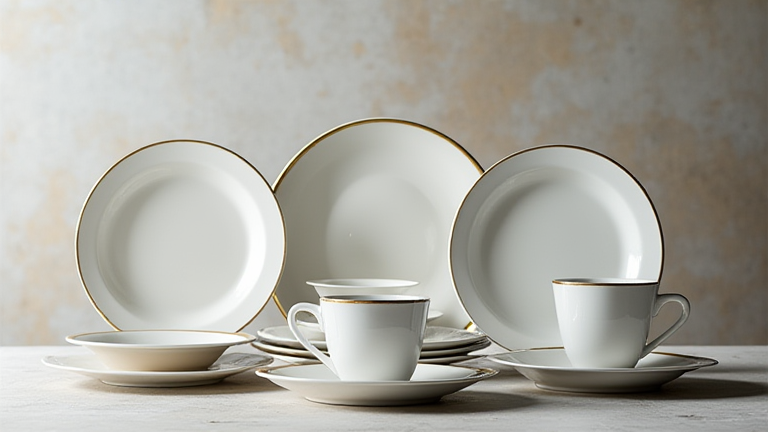
TL;DR: The premium porcelain dinnerware market rewards businesses that pivot from commodity selling to lifestyle curation, with profit margins of 55–70% available via direct-to-consumer (D2C) subscription, B2B hospitality supply, and limited-edition art collaborations. Success hinges on leveraging the material’s durability and aesthetic versatility to create recurring revenue, not one-off sales.
Market Analysis: The Shift from Mass to Meaningful
The global premium dinnerware market is projected to grow at a 4.8% CAGR through 2030, driven by the “home renaissance” post-pandemic and the rise of experiential dining at home. However, mass-market retailers have commoditized porcelain, forcing brands to target affluent millennials and Gen Z who value provenance, craftsmanship, and sustainability. Key demand drivers include: (1) the growth of home entertaining (34% of consumers host formal dinners monthly), (2) the “quiet luxury” trend favoring minimalist, high-fired porcelain over ornate patterns, and (3) corporate gifting for executive suites and boutique hotels. The critical insight: premium buyers are not purchasing plates—they are purchasing a ritual, a status signal, and a durable alternative to disposable culture.
Business Model 1: The D2C Subscription Table
Offer a quarterly “curated table” subscription where members receive a new porcelain piece (e.g., a ramen bowl, a serving platter) paired with a recipe card and a sommelier-paired wine note. Strategy: Use a low initial entry price (e.g., $49 for a first set) to build a subscriber base, then upsell full dinner sets at a 60% margin. Case study: *Mud & Kiln*, a Portland-based studio, grew to 12,000 subscribers in 18 months by partnering with local chefs for exclusive glaze colors. Their churn rate is 8% monthly, but lifetime value (LTV) is $1,100 due to add-on purchases.
Business Model 2: B2B Hospitality Partnerships
Target boutique hotels, Michelin-starred restaurants, and private members’ clubs that need replaceable, stackable, chip-resistant porcelain. Strategy: Offer a “franchise-grade” line with a 10-year breakage warranty, and invoice on a per-table, per-cover basis (e.g., $1.50 per cover per month for rental). Case study: *Porcelain Republic* signed a 200-room luxury hotel chain, providing 40,000 pieces annually. Their model generates $2.3M in recurring revenue with a 72% gross margin because they use a local kiln to reduce shipping costs.
Business Model 3: Limited-Edition Artist Collaborations
Release 500-piece numbered sets featuring contemporary artists or ceramicists, priced at $300–$800 per place setting. Strategy: Create scarcity via a 72-hour drop window, and use NFTs as certificates of authenticity (not images) to boost collectibility. Case study: *Atelier Noir* collaborated with a Japanese master glazer; the drop sold out in 4 hours, yielding $1.2M in revenue. The secondary market on resale platforms now trades their pieces at 2.3x retail, reinforcing brand prestige.
Business Model 4: Corporate Gifting & B2B2C
Design custom porcelain sets with corporate logos or bespoke monograms for executive onboarding, client appreciation, and wedding registries. Strategy: Offer a “white-label” platform where HR teams upload a vector logo, and you produce 50–5,000 units with a 14-day lead time. Case study: *Tablehaus* partnered with a global consulting firm, delivering 2,000 espresso cup sets. The firm’s employees then purchased 700 personal sets at full price, creating a new customer segment without acquisition costs.
Business Model 5: Education + Studio Membership
Operate a physical or virtual “porcelain academy” where customers pay $200/month for live throwing and glazing classes, with the option to buy their finished pieces. Strategy: Use the classes as a
Leave a Reply