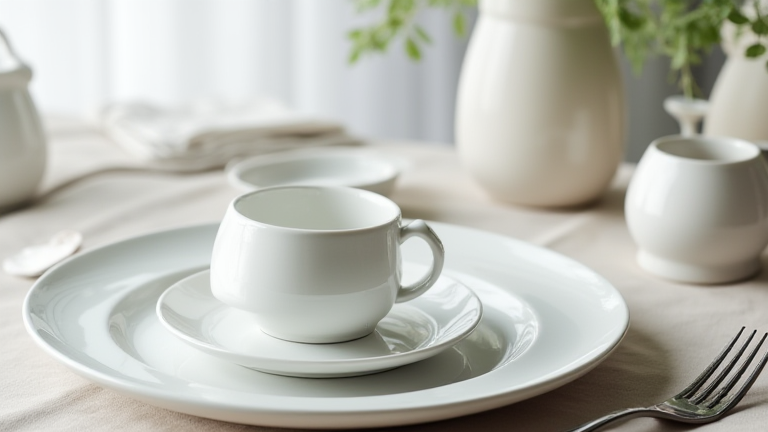
TL;DR: Yes, porcelain dinnerware is safe for everyday use when properly fired and glazed, as it is non-porous, chemically inert, and free of harmful lead or cadmium in modern, certified products. Choose reputable brands with FDA or Proposition 65 compliance to eliminate any risk of heavy metal leaching.
What Makes Porcelain Different from Other Ceramics?
Porcelain is a type of ceramic fired at extremely high temperatures—typically between 1,200°C and 1,400°C (2,200°F to 2,550°F). This vitrification process fuses the clay particles into a glass-like, non-porous surface. Unlike earthenware or stoneware, which may retain microscopic pores, porcelain absorbs almost no water. That means bacteria, oils, and food acids cannot penetrate the surface, making it inherently more hygienic. The glaze, when lead-free and food-safe, seals the body completely, so nothing from the clay can migrate into your meals.
If you want to dig deeper, check out our guide on Healthy Porcelain Dinnerware: Is It Safe?.
Heavy Metals and Lead: The Real Concern
Historically, some ceramic glazes used lead or cadmium to create bright colors and smooth finishes. When improperly fired, these metals can leach into acidic foods like tomato sauce or citrus juices. However, modern porcelain dinnerware from established manufacturers—especially those exporting to the U.S., EU, or Japan—must meet strict safety standards. The FDA (21 CFR 175.300) and California’s Proposition 65 limit lead to 0.5 micrograms per milliliter of leaching solution. Always check for a “lead-free” or “cadmium-free” label, and avoid hand-painted, artisan pieces from unregulated sources unless they provide a certificate of compliance.
Health Benefits of Switching to Porcelain
Beyond safety, porcelain offers practical wellness advantages. Its non-porous surface prevents the growth of mold and mildew, especially in humid environments. It is also dishwasher-safe and microwave-safe (unless metallic trim is present), reducing the need for harsh chemical cleaners. Unlike plastic or melamine, porcelain does not release endocrine-disrupting chemicals like BPA or phthalates when heated. For people with sensitive digestion or autoimmune conditions, using a chemically inert surface minimizes exposure to trace irritants. Additionally, porcelain’s thermal retention keeps food warm longer, which may encourage slower, more mindful eating—a habit linked to better satiety and digestion.
Lifestyle Tips for Safe Long-Term Use
Even the safest porcelain can fail if chipped or cracked. A damaged glaze exposes the underlying clay, which may harbor bacteria or allow metal migration. Inspect your plates and bowls monthly; retire any piece with visible cracks, crazing (fine spiderweb lines), or missing glaze. When buying new dinnerware, favor white or light-colored interiors—these are easier to check for wear and contain fewer decorative pigments. Avoid using porcelain in microwaves with metallic rims, as arcing can create micro-cracks. For daily use, hand-washing with mild soap is gentler, but if you use a dishwasher, choose a cycle without a heated dry phase to prevent thermal stress.
Environmental and Cost Considerations
Porcelain is durable and can last decades, reducing waste from disposable or short-lived dinnerware. While the initial cost is higher than melamine or stoneware, its longevity makes it a cost-effective, sustainable choice. When disposing of old porcelain, do not recycle it in standard glass bins—donate or repurpose as plant saucers or mosaic art.
FAQ
Q: Can porcelain dinnerware leach lead if I use it every day?
A: Not if it is certified lead-free and glazed properly. Reputable brands test for compliance with FDA limits (≤0.5 µg/mL). Avoid vintage or imported decorative pieces without labels, as these are the primary risk. For daily use, stick to commercial-grade porcelain from known manufacturers.
Q: Is porcelain safe for microwave and dishwasher use?
A: Yes, provided it has no metallic trim or painted decorations. Microwave-safe porcelain heats evenly without releasing chemicals. Dishwasher use is
Leave a Reply