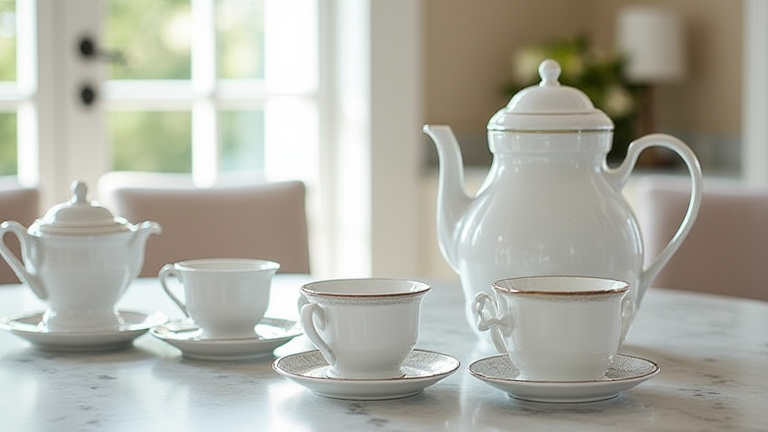
TL;DR: Porcelain dinnerware elevates everyday dining by merging artistic heritage with practical durability, turning meals into mindful rituals. Its timeless elegance lies in its ability to transform a simple table into a canvas for culture, connection, and personal expression.
The Quiet Revolution on Your Table
In an age of disposable convenience and hurried meals, the act of sitting down to a proper dinner has become a radical form of self-care. Yet, the plate beneath your food is often an afterthought—a utilitarian circle of ceramic or melamine. But what if the plate itself could be the storyteller? Enter porcelain, a material that has graced royal courts and humble tea houses for over a thousand years. Unlike stoneware or earthenware, porcelain is fired at extremely high temperatures (around 1,300°C), resulting in a non-porous, glass-like surface that is both remarkably strong and delicately translucent. This isn’t just dishware; it’s a piece of history that you can hold in your hands.
If you want to dig deeper, check out our guide on The Rise of Cold Brew: Why Artisan Coffee Trends Are Booming.
More Than a Meal: The Cultural Tapestry
Porcelain’s journey began in China during the Tang dynasty, where it was revered as “white gold.” The Silk Road carried these prized pieces to Europe, sparking a frenzy that led to the founding of legendary factories in Meissen, Sèvres, and eventually Wedgwood. When you choose a porcelain plate with a hand-painted cobalt rim or a minimalist matte glaze, you are not just selecting a color scheme—you are participating in a global dialogue of craftsmanship. For the travel enthusiast, porcelain is a souvenir that doesn’t fade or break in the dishwasher. It captures the essence of a place: a Japanese yakimono pattern whispers of Kyoto’s tea ceremonies, while a French faience design recalls Provence’s sun-drenched markets. Each meal becomes a mini-journey, a passport stamp on your palate.
The Ritual of Slow Dining
Psychologists have long noted that the weight, texture, and temperature of your tableware influence your perception of food. A heavy, cool porcelain plate signals abundance and quality, slowing down your eating pace and encouraging mindfulness. This is where personal growth meets daily habit. By replacing chipped, mismatched mugs with a cohesive set of porcelain dinnerware, you create a sensory anchor. The gentle clink of a porcelain cup against a saucer, the smooth glide of a fork across its glazed surface—these micro-experiences pull you out of autopilot and into the present moment. You begin to savor not just the taste, but the occasion. Hosting a dinner party becomes less about impressing guests and more about curating an atmosphere of warmth and intention.
Practicality Meets Poetry
Some shy away from porcelain, fearing it is too delicate for daily life. This is a myth. High-quality porcelain is actually more chip-resistant than earthenware and does not absorb odors or stains from tomato sauce or turmeric. It is microwave-safe, oven-safe (up to certain temperatures, check the base), and dishwasher-safe, making it a workhorse disguised as an heirloom. The real luxury of porcelain is its low-maintenance elegance. It does not require hand-washing with silk gloves; it simply asks to be used. Unlike trendy, porous ceramics that crackle and gray over time, porcelain maintains its glossy integrity for decades, meaning your investment pays dividends in both beauty and function.
A Table for the Soul
Ultimately, elevating your dining with porcelain is an act of self-respect. It declares that you deserve a beautiful environment, even on a Tuesday night with takeout. It bridges the gap between the ordinary and the extraordinary. Whether you are layering a fine bone china teapot with a rustic linen napkin, or pairing a stark white minimalist plate with vibrant street food, porcelain provides the blank canvas. It does not shout; it hums. It invites you to lean in, to share stories, to pass the bread. In a world that often feels disposable, the enduring elegance of porcelain is a quiet rebellion—a commitment to
Leave a Reply