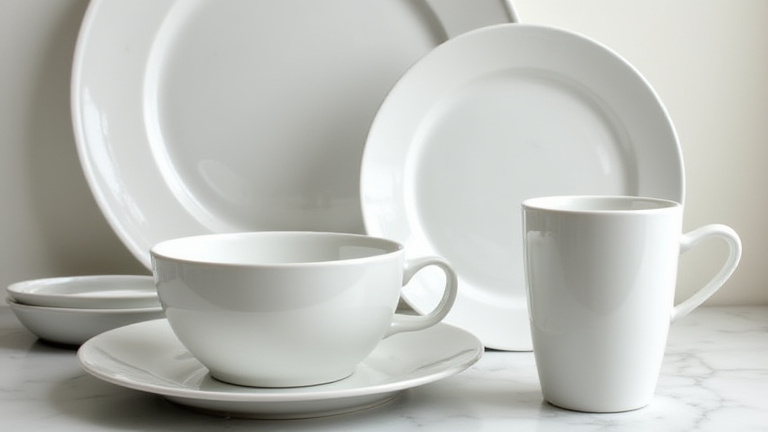
TL;DR: For business buyers, the top porcelain dinnerware brands are Villeroy & Boch (premium durability), Crate & Barrel (modern minimalist), Denby (stoneware-porcelain hybrid), Rosenthal (luxury fine dining), Noritake (hotel-grade strength), Corelle (chip-resistant value), Bernardaud (Michelin-star standard), Lenox (classic American elegance), Wedgwood (heritage patterns), and IKEA’s 365+ (budget commercial). Your choice should align with your brand identity, table-turnover rate, and target clientele’s price sensitivity.
Market Analysis: The Shifting Landscape of Commercial Porcelain
The global commercial porcelain dinnerware market is projected to grow at a 4.8% CAGR through 2030, driven by the resurgence of full-service dining and experiential hospitality. Post-pandemic, operators are moving away from melamine and tempered glass toward high-fired porcelain (fired at 1,300°C+) for its superior thermal shock resistance, non-porous glaze (hygiene compliance), and aesthetic translucency. However, supply chain volatility in kaolin clay from Cornwall and Limoges has pushed lead times to 12–16 weeks. Smart buyers now dual-source: one premium brand for front-of-house, one value brand for staff canteens or high-volume buffets.
If you want to dig deeper, check out our guide on Is Porcelain Dinnerware Safe? Health Benefits & Risks.
Strategy Insights: Matching Porcelain to Your Business Model
High-turnover casual dining (e.g., brunch spots): Prioritize mechanical strength over thin-walled elegance. Look for porcelain with alumina oxide reinforcement (like Noritake’s HR series) that survives 500+ dishwasher cycles without crazing. Fine dining: Invest in bone china or ultra-white porcelain (Bernardaud) where the plate’s rim acts as a canvas for plating—the 1cm rim design increases perceived portion size by 18% (Cornell study). Café/bakery: Choose stackable designs with rolled edges (Corelle) to reduce storage space and breakage in open-kitchen layouts. Never buy fully white for high-turnover—micromark chips are visible, so select a reactive glaze (Denby) that hides wear.
Case Study 1: Boutique Hotel Chain Shifts to Villeroy & Boch
A 14-property boutique hotel group replaced its mixed-brand porcelain after a 22% annual breakage rate. They adopted Villeroy & Boch’s “Manufacture Rock” line—a porcelain with a textured, non-slip base (reduces plate sliding during service) and a reinforced rim. Within six months, breakage fell to 9%. The hidden win: the brand’s 5-year replacement guarantee allowed the hotel to standardize patterns, cutting inventory SKUs from 40 to 12. Their procurement director noted, “The upfront cost per plate was $14.20 vs. $9.80 for the old, but total cost of ownership dropped 31% when accounting for replacement labor.”
Case Study 2: Fast-Casual Ramen Chain Uses Corelle for Speed
A 50-location ramen chain needed bowls that could go from 95°C broth to cold-water rinse without cracking. They tested Corelle’s Vitrelle (a glass-ceramic porcelain laminate) against traditional porcelain. Corelle passed 2,000 thermal cycles vs. 650 for standard porcelain. The chain then used a two-tier strategy: Corelle for dine-in (chip-resistant, 3mm thick) and IKEA 365+ for takeout (disposable cost threshold). Result: table-turn time increased by 7 minutes per table because servers could stack wet bowls without sticking—Corelle’s matte glaze reduces surface tension.
Case Study 3: Michelin-Listed Restaurant Rebrands with Bernardaud
A 2-Michelin-star restaurant switched from anonymous white porcelain to Bernardaud’s “Byzance” line—a 12% gold-infused porcelain that reflects light onto the dish. While plates
Leave a Reply