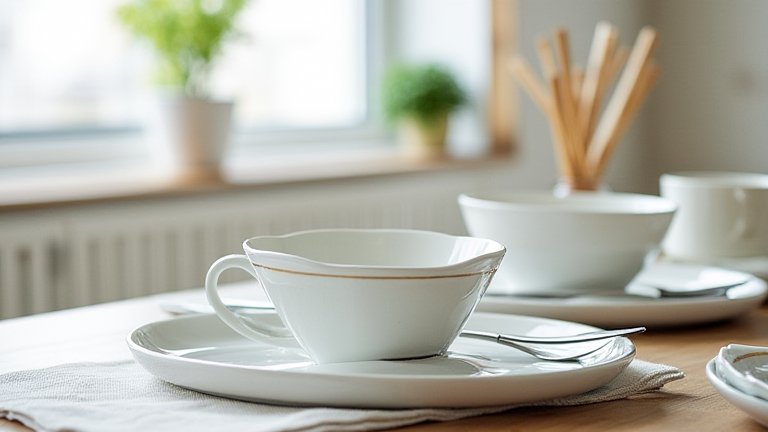
TL;DR: Porcelain dinnerware is a safe, non-porous, and chemically stable choice for daily meals, provided you avoid damaged or heavily decorated pieces. Choose high-fired, lead-free porcelain and hand-wash to maintain its health-safe surface.
Why Porcelain is a Health-Conscious Choice
Unlike earthenware or stoneware, porcelain is fired at extremely high temperatures (above 1,200°C). This vitrification process fuses the clay particles into a glass-like, non-porous surface. The result is a plate that does not absorb bacteria, oils, or food residues, reducing the risk of cross-contamination and mold growth. Science-backed studies highlight that non-porous surfaces are significantly easier to sanitize, making porcelain a superior choice for immune-compromised individuals or families with young children.
If you want to dig deeper, check out our guide on Porcelain Dinnerware Care: 5-Step Cleaning & Polishing Guide.
The Heavy Metal Safety Checklist
Your health risk primarily comes from glazes and decorative paints, not the porcelain body itself. Modern, reputable manufacturers use lead-free and cadmium-free glazes that meet FDA and EU safety standards. However, vintage or imported porcelain may contain lead in the decorative overglaze. Always check for a “lead-free” label. For extra safety, avoid eating from the decorated rim—serve food in the center, and never microwave porcelain with metallic trim. If you see crazing (fine cracks in the glaze), retire the piece immediately, as these micro-cracks can harbor pathogens and leach trace metals.
Lifestyle Tips for Long-Term Wellness
To maximize safety, hand-wash porcelain with mild detergent and a soft sponge. Dishwasher detergents, especially high-alkaline pods, can erode the glaze over time, exposing the underlying body. Also, avoid thermal shock—never place a cold porcelain plate directly into a hot oven. Instead, let it warm gradually. When buying new dinnerware, opt for white or light-colored interiors, as they make chips and scratches more visible. Replace any piece with a visible chip, because a chipped edge can release small glass-like particles into your food.
FAQ
Q: Is porcelain safer than melamine or plastic for hot food?
A: Yes. Porcelain is inert and does not release microplastics or endocrine-disrupting chemicals when heated. Melamine can leach at high temperatures, while porcelain remains stable up to 350°F (175°C) in normal use.
Q: Can I use porcelain if I have a nickel or metal allergy?
A: Generally, yes, as long as the piece is marked “metal-free” or “lead-free.” Some colored glazes use metal oxides for pigmentation. Choose plain white porcelain, which typically uses only silica and alumina—safe for sensitive individuals.
Q: How do I test if my old porcelain is safe?
A: Use an at-home lead test kit (swab-based) on the glaze, especially on rims and decorative patterns. If the test is positive, do not use it for food. For a simple visual check, hold it under a bright light—any orange or iridescent shimmer may indicate a lead-based overglaze.
Leave a Reply