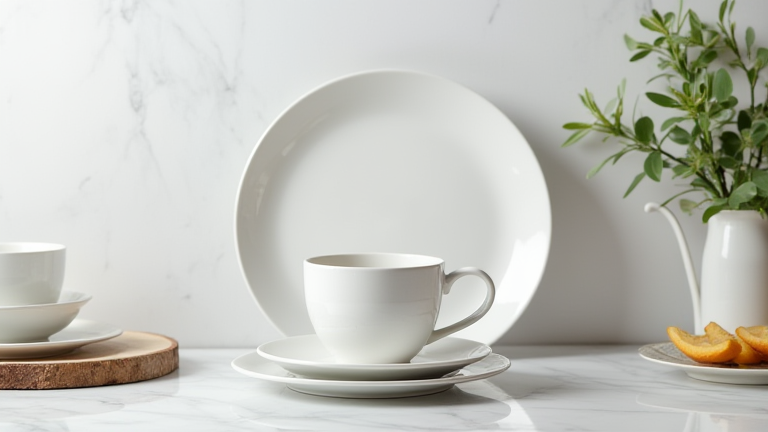
Porcelain Dinnerware for Business: Trends, Costs & Sourcing
TL;DR: The porcelain dinnerware market is shifting toward sustainable, minimalist designs that enhance brand identity, with costs driven by raw material volatility and shipping logistics. Businesses should prioritize long-term durability and consistent quality over lower initial prices to maximize ROI through reduced replacement rates and elevated customer perception.
Market Analysis
The global porcelain dinnerware industry is experiencing a significant resurgence, driven by the hospitality sector’s return to full capacity and the growing consumer preference for high-quality, durable tableware. Unlike mass-produced ceramic or stoneware, porcelain offers superior strength, a thinner profile, and a brighter white finish that enhances food presentation. Market data indicates a steady compound annual growth rate, particularly in the mid-to-high-end segments where restaurants and hotels seek to differentiate their dining experiences. However, the supply chain remains fragile. Key production hubs in China, Japan, and Europe face varying levels of export regulation and raw material scarcity, specifically regarding high-purity kaolin clay. This volatility necessitates a strategic approach to procurement, moving away from spot buying toward long-term contracts with verified manufacturers.
If you want to dig deeper, check out our guide on Safe & Stylish: The Health Benefits of Porcelain Dinnerware.
Strategy Insights
For business owners, the strategy of sourcing porcelain must balance aesthetic appeal with operational resilience. The current trend favors “quiet luxury,” featuring matte glazes, organic shapes, and earthy tones that complement modern interior design. However, the primary strategic insight is durability. Porcelain’s high firing temperature results in a non-porous surface that resists staining and chipping better than lower-grade ceramics. This translates to a lower total cost of ownership. A strategic partnership with a supplier who offers custom branding capabilities allows businesses to imprint their logo discreetly, turning tableware into a silent marketing tool. Furthermore, implementing a tiered purchasing model—buying premium sets for fine dining areas and robust, slightly thicker porcelain for high-volume casual spaces—optimizes budget allocation without sacrificing brand integrity.
Case Studies
Consider “The Urban Fork,” a chain of boutique cafes in London. By switching from generic white ceramic to a custom-designed, recycled-glass porcelain set, they reduced their breakage rate by 40% over two years. The unique design also increased social media engagement, as customers frequently photographed their meals, providing free organic marketing. Conversely, a mid-sized hotel chain in New York attempted to cut costs by sourcing unglazed, low-fired porcelain from an unverified offshore vendor. Within six months, 30% of the inventory cracked due to thermal shock from ovens, forcing a complete restock and damaging their brand reputation for quality. These examples highlight that cheap sourcing often proves expensive in the long run, while quality investment yields tangible operational and branding benefits.
FAQ
Q: Why is porcelain more expensive than stoneware initially?
A: Porcelain requires higher firing temperatures and purer raw materials, which increases production energy costs and reduces yield, resulting in a higher upfront price per unit.
Q: What is the ideal minimum order quantity for custom porcelain?
A: Most manufacturers require a minimum of 500 to 1,000 pieces for custom designs to justify the cost of creating new molds and glaze formulas.
Q: How can businesses reduce breakage rates in high-traffic areas?
A: Opting for reinforced rim designs and training staff on proper handling techniques, such as carrying plates from the back, significantly reduces accidental impacts and thermal shock damage.
Leave a Reply