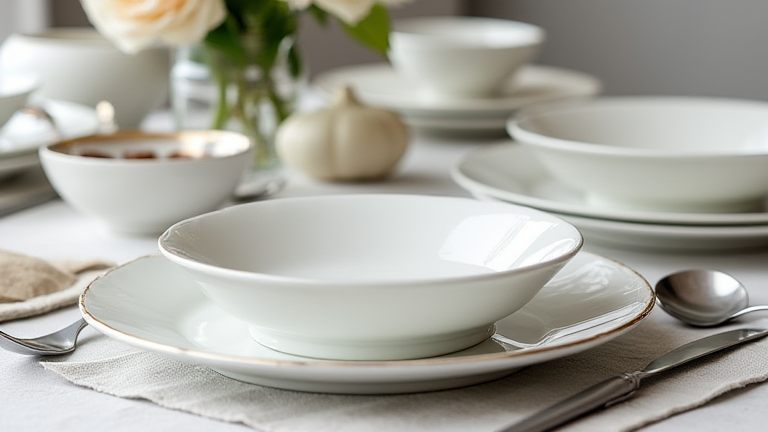
TL;DR: Porcelain dinnerware transforms daily meals into mindful rituals, merging durability with aesthetic refinement. It’s a low-cost, high-impact lifestyle upgrade that elevates perception of food, slows down consumption, and connects you to centuries of craft.
The Art of the Everyday Table
In a world of rushed takeout and chipped ceramic mugs, the plate you eat from is rarely a conscious choice. Yet travel teaches us otherwise: in Kyoto, a single handmade bowl is treated with the reverence of a temple bell; in a Provençal farmhouse, the same rustic platter serves stew and stories for decades. Porcelain—invented in China over a thousand years ago and perfected in Europe—is the quiet luxury that bridges these cultures. Unlike stoneware’s heavy clunk or glass’s cold ping, porcelain rings with a subtle, bell-like tone when tapped. That sound is your first signal: this is not disposable. This is a vessel designed to hold both food and attention.
If you want to dig deeper, check out our guide on Elevate Your Home: Why Porcelain Dinnerware is the Lifestyle.
Why Porcelain Changes How You Eat
The upgrade is not just visual. Porcelain’s non-porous, glass-like surface doesn’t absorb odors or stains, so your tomato curry won’t ghost tomorrow’s oatmeal. Its thin rim and smooth glaze make food appear more vibrant—a bright saffron rice or a dark chocolate mousse pops against a white or celadon backdrop. But the deeper shift is behavioral. When you set a table with porcelain, you unconsciously slow down. You plate with intention. You sit, you look, you taste. This is the “personal growth” angle: a $40 plate can’t fix your stress, but it can force a pause. Studies in mindful eating suggest that visual contrast and tactile quality increase satiety and enjoyment, meaning you eat less but feel more satisfied. That’s a lifestyle upgrade worth more than any diet app.
Durability Meets Culture
Many assume porcelain is fragile, but high-fired porcelain (fired at 1,300°C+) is surprisingly tough—more chip-resistant than earthenware and denser than bone china. It’s also dishwasher, microwave, and oven safe (check your brand). This durability makes it a travel-friendly companion: a set of four porcelain bowls packs flat in a suitcase, turning a hostel kitchen into a bistro. Culturally, porcelain carries history—from Ming vases to Limoges heirlooms—but modern makers like Japanese Hasami or Portuguese Vista Alegre offer minimalist designs that fit any aesthetic. You’re not buying a pattern; you’re buying a ritual. Start with a dinner plate, a pasta bowl, and a mug. Use them exclusively for a week. Notice how your coffee tastes warmer, your salad looks crispier, your evening feels less frantic.
FAQ
Q: Is porcelain dinnerware safe for everyday use, or is it only for special occasions?
A: Absolutely safe for daily use. High-quality porcelain is dishwasher, microwave, and oven safe (up to 350°F typically), and its non-porous surface resists scratches and bacteria. Use it daily—that’s the whole point of the upgrade.
Q: How do I tell real porcelain from cheaper ceramic or stoneware?
A: Hold it up to light—porcelain is slightly translucent at the rim. Tap it gently; it rings like a bell, not a thud. Also check the base: unglazed porcelain shows a white, vitrified body, while stoneware is tan or gray.
Q: What’s the best way to care for porcelain to ensure it lasts?
A: Avoid sudden temperature shocks (e.g., don’t put a frozen plate in a hot oven). Stack with a felt liner or paper towel between plates to prevent scratching, and clean with mild soap—never abrasive scrubbers. With basic care, a good set lasts decades.
Leave a Reply