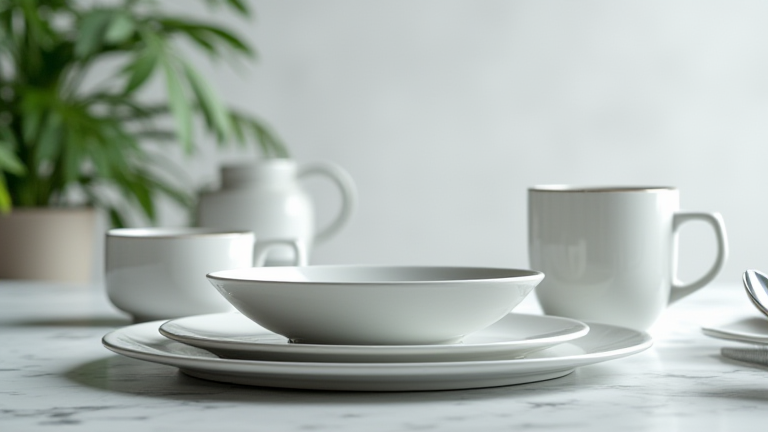
Tech in Porcelain: How Innovation Enhances Dinnerware
TL;DR: Modern porcelain dinnerware leverages advanced material science and digital manufacturing to create plates that are significantly harder, thinner, and more durable than traditional ceramics. These technological advancements allow for intricate designs, improved heat resistance, and enhanced sustainability without compromising the aesthetic elegance expected in fine dining.
The Evolution of Material Science
The foundation of high-tech porcelain lies in the refinement of raw materials. Traditional porcelain relies on a specific mix of kaolin, feldspar, and quartz, fired at temperatures exceeding 1,300°C. However, contemporary manufacturers are integrating nano-technologies to alter the microstructure of the ceramic body. By incorporating nanoscale particles during the slip preparation phase, engineers can reduce the porosity of the final product to near-zero levels. This results in a material that is not only lighter but also possesses superior mechanical strength. The latest developments focus on “translucent white” bodies that achieve higher brightness and whiteness indices, which were previously unattainable with standard industrial processes. This innovation ensures that the dinnerware maintains its pristine appearance even after years of rigorous use in commercial kitchens and home settings.
If you want to dig deeper, check out our guide on Tech-Forward Porcelain: How Smart Dinnerware Changes Dining.
Digital Manufacturing and Precision Engineering
Production methods have shifted from manual pressing to digital precision. Additive manufacturing and CNC milling technologies are now being used to create molds with microscopic accuracy. This allows for the production of ultra-thin rims and complex geometric patterns that would be impossible with traditional stamping. For instance, new lines of dinnerware feature rims as thin as 1.5 millimeters, reducing material usage by up to 30% while increasing structural integrity. Furthermore, digital glazing systems allow for the application of glazes with extreme uniformity. Computer-controlled spray nozzles ensure that every plate receives an identical layer of glaze, eliminating the human error that often leads to uneven firing or color inconsistencies. This level of control is critical for luxury brands that promise perfection in every piece sold.
Industry Impact and Sustainability
The integration of technology into porcelain production has profound implications for the industry. First, it drives down waste. Digital simulation software allows manufacturers to test structural integrity virtually before a single kiln is fired, reducing the number of defective batches. Second, it enhances sustainability. Newer kiln technologies utilize electric arc firing, which is more energy-efficient than traditional gas-fired kilns. Additionally, the durability of tech-enhanced porcelain extends the product lifecycle, reducing the need for frequent replacement. Consumers are increasingly demanding eco-friendly options, and these innovations meet that demand by producing products that are both high-performance and environmentally responsible. The market is seeing a shift where functional durability is valued as highly as aesthetic beauty, driving sales in both residential and commercial sectors.
FAQ
Q: Is tech-enhanced porcelain safe for microwave and dishwasher use?
A: Yes, the advanced firing processes create a non-porous surface that is highly resistant to thermal shock, making it fully safe for microwave heating and dishwasher cleaning without risk of cracking or glaze degradation.
Q: How does digital molding affect the cost of dinnerware?
A: While the initial setup for digital manufacturing is high, the reduction in material waste and defective products often stabilizes costs, allowing premium brands to offer high-tech features at competitive price points compared to traditional handcrafted ceramics.
Q: Can these new materials withstand heavy commercial kitchen use?
A: Absolutely, the nano-structured bodies offer superior impact resistance and abrasion resistance, ensuring that the dinnerware can handle the high-volume, high-stress environments of professional restaurants without losing its structural integrity or aesthetic appeal.
Leave a Reply